
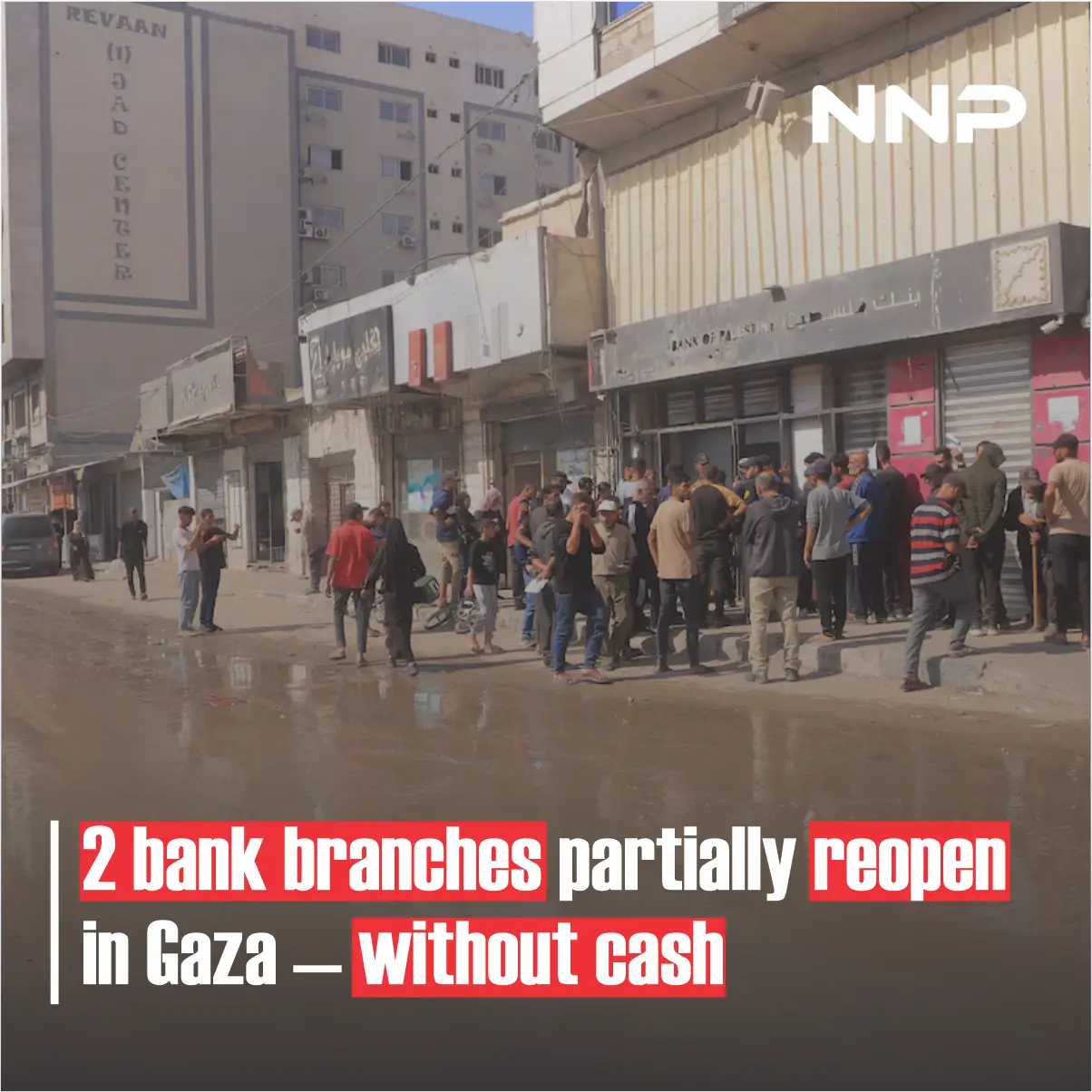
Two bank branches reopen — but with no cash
Two commercial bank branches in Gaza have partially reopened, following the cease-fire and initial easing of conflict, yet they are unable to dispense physical cash.
The reopening took place after banks began operations from 16 October 2025. But as one resident put it:
“You just come and do paperwork transactions and leave. There is no money, liquidity at the bank.”
So while branches are technically open for certain services, withdrawals of banknotes remain impossible. Customers can visit for transfers, account-updates and other non-cash services—but not to take out the money they desperately need.
Why there is no cash
Several factors combine to create this severe liquidity crisis:
- The banks had been closed or badly damaged during years of conflict, bombardment and blockade. Banking infrastructure in Gaza is largely destroyed or degraded.
- A major constraint: Israel has blocked transfers of banknotes and new currency into Gaza, following the outbreak of war and the attack of October 2023.
- As a result, banks lack physical cash in their vaults or ATMs, meaning they cannot fulfil standard withdrawal requests. The reopened branches are limited to electronic or bookkeeping operations.
- With no cash supply, many residents are forced into informal cash-for-bank-transfer schemes, paying steep fees (20-40 %) just to convert their account balances into physical money.
Impact on daily life
- For a population already ravaged by war, displacement, job loss and destruction of homes, the inability to access cash adds another crippling layer of difficulty.
- Even small purchases such as food, utilities or transport often require cash in Gaza’s economy. With no cash withdrawals, people are vulnerable to being barred from buying basics.
- Informal money-brokers exploit the situation, charging exorbitant fees for what little liquidity is available. One merchant described treating heavily worn banknotes as acceptable only if the serial number remains readable.
- Some families are turning to barter, repairing torn bank-notes, or using electronic transfers—even for purchases of eggs or bread—despite the large risk and cost.
What it means for reconstruction & recovery
- The reopening of branches is a positive sign: it signals banks and services are attempting to restore normalcy. But without cash, the reopening is only partial and the benefit to ordinary people is limited.
- The liquidity crunch will impede reconstruction efforts, wage payments, business activity and overall economic recovery in Gaza.
- Aid agencies and financial authorities will need to address not just rebuilding infrastructure, but restoring the physical cash supply chain—otherwise services remain dysfunctional.
- The situation also raises broader questions about economic sovereignty and dignity: people with bank accounts but no access to the money in them are effectively excluded from the formal economy.