
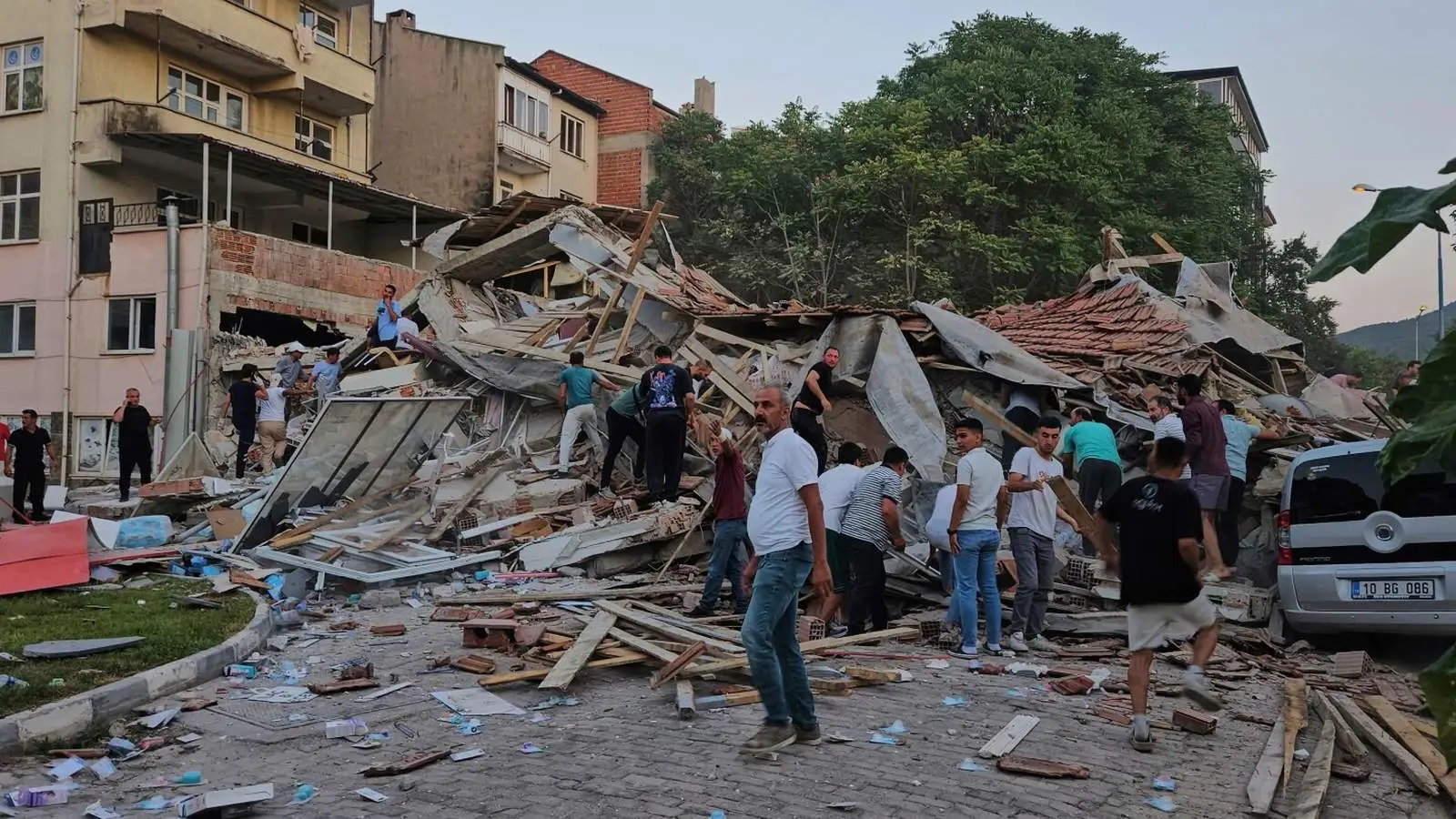
A magnitude 6.1 earthquake struck the town of Sındırgı in the western Turkish province of Balıkesir late on Monday, October 27 2025, rattling buildings across multiple provinces and stirring fresh concerns in a nation already familiar with seismic risk.
Details of the Quake
According to the country’s disaster authority, AFAD, the tremor occurred at 10:48 p.m. local time (19:48 GMT) and registered a depth of just 5.99 kilometres, making it unusually shallow—a factor that can amplify surface shaking.
The quake was strongly felt not only in Balıkesir but across western Turkey, including major hubs like Istanbul, İzmir, Bursa and Manisa.
Impact & Damage
Although no fatalities have been reported thus far, the effects are still significant. Interior Minister Ali Yerlikaya confirmed that several previously damaged buildings—three unoccupied structures and one two-storey shop—collapsed in Sındırgı. Thankfully, these were already evacuated and unoccupied at the time of collapse. Hürriyet Daily News+1
At least 22 people sustained injuries, primarily from panic-induced falls or running outdoors, rather than from structural collapse. Hürriyet Daily News
Amidst the quake, heavy rain began in some sections and many residents chose to stay outdoors overnight, fearful of aftershocks and further building damage. Local authorities opened mosques, schools and sports halls as emergency shelters. AP News
Context: A Region Under Strain
The Balıkesir region has been seismically active for months. A previous 6.1-magnitude quake on August 10 2025 also struck near Sındırgı, resulting in one death and dozens of injuries. Wikipedia+1
Turkey sits atop several active fault zones and has seen devastating earthquakes in recent years—most notably the February 2023 7.8-magnitude quake in the south that claimed over 53,000 lives. Hürriyet Daily News
Experts suggest that the region now grapples with “fatigue” in buildings that may already have been weakened by prior tremors, raising the risk that even moderate quakes can cause outsized damage. Hürriyet Daily News
Safety Measures & Government Response
In the immediate aftermath, AFAD teams and other institutions launched inspections across affected areas, assessing structural integrity and utility disruptions. Vice President Cevdet Yılmaz assured that reports were being reviewed carefully. Anadolu Ajansı
Schools in Balıkesir have been suspended for at least a day as authorities tally damage and review safety before resuming classes. Hürriyet Daily News
Experts are strongly advising residents to avoid entering buildings that show damage, stay clear of non-structural hazards, and remain alert for aftershocks that could continue for days or even weeks. Hürriyet Daily News
Why This Matters
This quake underscores the heightened vulnerability of western Turkey, a region typically overshadowed by the more infamous North Anatolian Fault near Istanbul. But with a shallow depth and nearby population centres, the risk of a serious incident remains real.
Even with moderate magnitude, structural failures can occur if buildings are old, poorly maintained, or already damaged. The recent collapse of previously compromised buildings illustrates this starkly.
From a broader viewpoint, this event reinforces the urgency for ongoing enforcement of strict seismic codes, retrofitting of older structures, and community preparedness in regions that many may still consider “less prone” to big quakes.
Moving Forward
In the short term:
- Rescue and structural inspection efforts will continue through the region, especially in Sındırgı and surrounding villages.
- Officials will monitor aftershock activity and issue advisories accordingly.
- Authorities may accelerate retrofit programs for schools and public buildings identified as vulnerable.
Long-term:
- The Balıkesir region may receive increased attention for disaster preparedness funding and infrastructure upgrades.
- Public awareness campaigns will likely intensify, emphasizing simple but life-saving steps: “Drop, Cover, Hold On” and having an emergency kit ready.
- Urban development planners may revisit zoning and construction standards given the prevalence of older or damaged buildings now showing their weakness.