
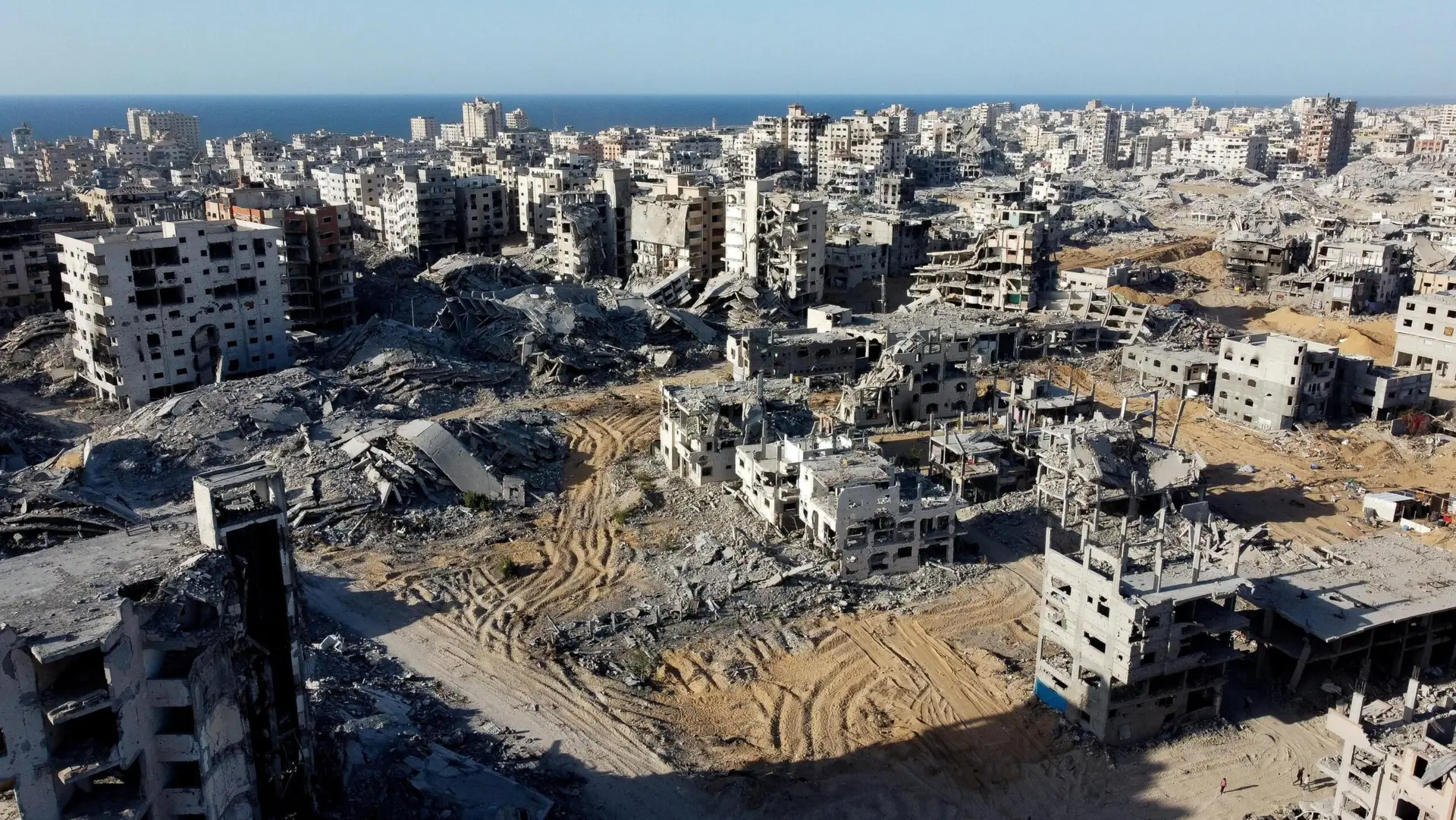
October 28, 2025 — Explosions ripped across Gaza on Tuesday evening after Israeli Prime Minister Benjamin Netanyahu ordered the military to carry out “powerful” strikes in response to what he described as a breach of a fragile, U.S.-brokered ceasefire. Witnesses and reporters on the ground said they heard jets and tankfire in Gaza City and other parts of the strip as tensions that had quieted since mid-October suddenly flared again.
Netanyahu’s office said the move followed security consultations and accused Hamas of violating the terms of the truce — specifically by mishandling the return of the remains of hostages. Israeli officials said one body handed over by Hamas was already known to Israeli authorities, which they called a “clear violation” of the agreement and grounds for an immediate response. The prime minister instructed the military to carry out strikes “immediately” and with force.
Within minutes of the order, reporters and residents in Gaza reported loud detonations and plumes of smoke over several neighborhoods. Gaza’s civil defense and local health officials said airstrikes struck parts of Gaza City and that there were reports of strikes near sensitive sites, including areas close to Shifa Hospital; casualty figures were not independently verified at the time of reporting. Hamas, for its part, denied responsibility for an attack in Rafah that Israel said provoked the retaliation and accused Israeli forces of breaching the truce.
Why this latest flare-up matters
The ceasefire that came into effect on October 10 had brought a dramatic, if uneasy, slowdown in the exchanges of fire that followed the catastrophic wave of violence after October 7, 2023. That truce was the product of intensive U.S. and regional diplomacy; both sides since have accused the other of violations as mediators work to recover the remains of hostages and arrange prisoner releases. By ordering immediate strikes, Netanyahu risks unraveling the fragile pause in large-scale combat, complicating diplomatic efforts and raising the prospect of renewed, broader fighting.
What happened leading up to the strikes
Israeli officials said the decision was prompted by a string of incidents in recent days, culminating in what they view as an improper handover of remains. According to those sources, one returned body had previously been identified by Israeli authorities — a discrepancy that prompted an angry response in Jerusalem and triggered the order for “powerful strikes.” Hamas denied acting in bad faith and said it would postpone further handovers, blaming Israel for other violations. Those competing accusations have been central to the rapid deterioration in trust that followed weeks of painstaking negotiations.
On-the-ground reports
Associated Press reporters and other journalists in the territory heard tank fire and saw explosions across the Gaza Strip, including Gaza City and Deir al-Balah. Local emergency services described several airstrikes and said teams were responding to damaged buildings and injured civilians. Israeli statements did not specify precise targets or casualty counts immediately after the strikes were launched. Independent confirmation of fatalities or the extent of damage is difficult amid the fog of a sudden escalation.
International reaction and diplomatic implications
Washington and other mediators had invested heavily in the October truce; U.S. officials had been publicly cautious but hopeful that the pause could be sustained while diplomats worked to resolve the remaining issues around hostages and detainees. The latest exchange prompted swift concern from actors trying to keep the deal alive. Political leaders and diplomats — both in the region and beyond — warned against actions that could set the parties back toward all-out war. Analysts say both sides continue to weigh domestic political pressures: for Netanyahu, showing strength in the face of perceived violations; for Hamas, maintaining leverage over a battered population and armed wings that resist appearing weak.
What to watch next
With explosions reported across multiple points in Gaza, the immediate questions are whether Israel will sustain a wider campaign of strikes and whether Hamas will answer in kind. Mediators are racing to clarify the circumstances around the disputed body handover and to revive confidence-building steps that had kept the ceasefire intact for just over two weeks. Humanitarian agencies are also watching closely: access for aid convoys and the condition of hospitals — already strained by months of conflict and infrastructure collapse — could become further endangered by renewed fighting.
A human toll beneath the headlines
Beyond geopolitics and ceasefire mechanics, the sudden spike in violence reverberates through communities still recovering from prolonged war. Gaza’s hospitals have been operating at or beyond capacity for months; any new strikes risk further civilian casualties and additional displacement. Families on both sides of the border, already traumatized by years of loss and insecurity, face the anguish of renewed uncertainty about the future of the truce and the fate of missing loved ones.
Conclusion
Netanyahu’s order for “immediate and powerful” strikes has once again exposed how precarious the October truce was from the start — fragile, contingent on perfect cooperation over the most painful and logistically complex aspects of the conflict, and vulnerable to rapid breakdown over disputed incidents. Whether diplomacy can re-establish the pause now depends on rapid, verifiable steps by both sides and energetic engagement by external mediators. For now, the sound of explosions in Gaza is a stark reminder that after two years of intermittent but devastating conflict, peace remains evasive and easily disrupted.