
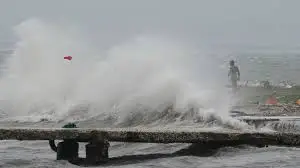
Below is a detailed, updated article on Hurricane Melissa, which has slammed Jamaica as a Category 5 storm — the most powerful to ever strike the island nation in recorded history.
October 28, 2025 — Hurricane Melissa, now confirmed as a Category 5 storm, made landfall on Jamaica’s southwestern coast earlier today, bringing wind speeds of 185 mph (≈295 km/h) and an exceptionally low central pressure of 892 millibars.
Meteorologists and disaster agencies have branded the event as “historic” and potentially the worst storm Jamaica has ever faced. The storm’s intensity, coupled with its slow movement and Jamaica’s rugged topography, amplify the risks of devastating flooding, landslides, and structural collapse.
Landfall and path across Jamaica
Melissa struck land near New Hope, about 62 km (39 mi) south of Montego Bay. Reports from the National Hurricane Center (NHC) indicate that the storm’s eyewall — the zone of most intense winds — moved inland over western Jamaica, cutting a diagonal path from St. Elizabeth parish and expected to exit near St. Ann parish.
As Melissa travels over Jamaica, the mountainous terrain is likely to weaken it somewhat, but the storm remains extremely dangerous. By mid-afternoon, sustained winds had decreased slightly — estimates suggest around 165 mph — but heavy rains, extreme gusts, and flooding remain catastrophic threats.
Storm surge, rain, and flooding risks
One of the gravest concerns is storm surge. The NHC warns of 9 to 13 feet (≈3 to 4 meters) of surge above ground level near the southern coast where landfall occurred. Some models suggest localized areas may see surges even higher, depending on coastal bathymetry and tides.
Heavy rainfall is expected to aggravate the situation. Accumulations of 15–30 inches (≈381 to 762 mm) are forecast in many parts of Jamaica, with some mountainous regions possibly receiving more. These amounts can trigger flash floods, river overflows, and widespread landslides — especially in vulnerable hillsides and valleys.
Given Melissa’s slow forward speed (roughly 8 mph or ~13 km/h) during landfall, areas may be exposed to intense conditions for several hours. This slow motion exacerbates flooding and increases damage potential.
Human impact & casualties
As of latest reports, at least seven deaths have been directly attributed to Melissa’s passage across the region — three in Jamaica and others in Haiti and the Dominican Republic. In Haiti and the Dominican Republic, heavy rains and flooding from Melissa’s outer bands had already caused fatalities and displacement before it reached Jamaica.
In Jamaica, authorities say casualty reporting will be slow due to communication blackouts, flooding, and damage to infrastructure.
Thousands of people were moved to shelters in advance of landfall, though reports suggest shelter uptake was limited. Many residents hesitated to evacuate, citing fears of theft, safety in shelters, or distrust borne from prior experiences.
Power outages have struck major parts of the island — affecting essential services, communications, water pumping, and medical facilities. Roads have reportedly collapsed in places, landslides blocked routes in mountainous zones, and dozens of homes have been destroyed or damaged.
Government response & preparations
Even before landfall, Jamaican Prime Minister Andrew Holness and government agencies had issued dire warnings. Evacuation orders were announced for multiple vulnerable parishes, including Port Royal, in the Kingston area. Some 881 shelters were activated across the island. Airports in Kingston and Montego Bay were shut down.
Holness publicly appealed to citizens:
“There is no infrastructure in the region that can withstand a storm of this strength.”
Despite those preparations, many counties reported low evacuation numbers. Some observers believe fear of losing homes or belongings deterred people from seeking refuge.
Jamaica’s disaster response agencies, in tandem with international partners (such as the Red Cross and UN groups), are on standby to deploy rescue, medical, and relief operations once conditions permit.
Downstream forecast & path beyond Jamaica
After crossing Jamaica, Melissa is projected to head toward eastern Cuba, where similar threats of wind, rain, floods, and landslides loom. Cuba has reportedly initiated evacuations in affected provinces, particularly Holguín. After Cuba, the storm is expected to move across the Bahamas and Turks & Caicos, albeit with gradual weakening.
Though weakening is expected due to land interaction and other factors, forecasters warn Melissa will likely remain a major hurricane (Category 3+) as it continues its trajectory.