
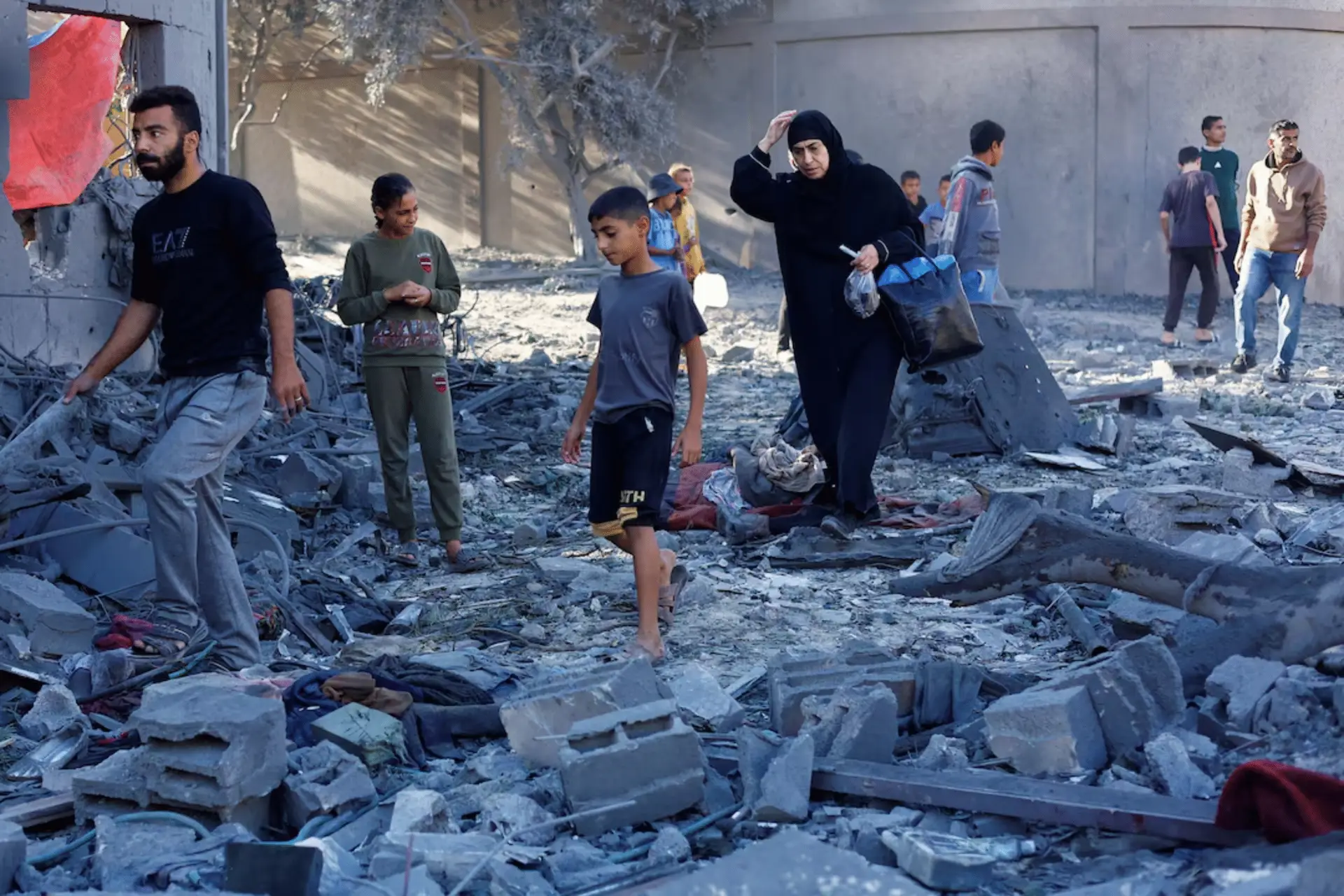
In what has become the deadliest burst of violence since the truce took effect, overnight air strikes by Israel Defense Forces (IDF) on the Gaza Strip have killed at least 104 Palestinians, including dozens of children, according to Gaza’s health authorities.
The strikes were carried out in response to what Israel says was a violation of the US-brokered cease-fire by Hamas—specifically the killing of an Israeli soldier and the delayed return of hostage remains. The scale of the bombardment and the civilian casualties have raised alarm about the fragility of the agreement.
What happened
Early on the night of October 29, multiple aerial strikes hit locations across Gaza. According to Gaza health officials:
- At least 46 children and 20 women were among the fatalities.
- Hospitals in Gaza City, Khan Younis and central Gaza reported scenes of mass casualties, with some facilities overwhelmed.
- Key urban locations, shelters for displaced persons and neighbourhoods near hospitals were targeted, according to local civil-defence sources.
Israel’s government, including Prime Minister Benjamin Netanyahu, stated that the strikes were ordered after the soldier’s death and alleged violation of the truce by Hamas. The military asserted that the cease-fire remains in effect, but emphasised Israel’s right to retaliate.
Why this is significant
This incident marks the most serious test of the truce reached on October 10, 2025, which had offered a pause in hostilities after nearly two years of war.
The casualty toll—particularly the high number of children—has intensified concerns among humanitarian agencies and world-leaders that the agreement could unravel. The fact that heavy strikes happened less than three weeks into the cease-fire underlines how volatile the situation remains.
Fallout & reactions
- Gaza’s civil-defence described the situation as “catastrophic and terrifying”.
- Hamas denied involvement in the initial attack on the soldier and suggested that Israel’s bombardment constitutes a clear violation of the truce.
- The U.S., via President Donald Trump and Vice-President JD Vance, reiterated Israel’s right of self-defence while urging the cease-fire be maintained.
- Israel temporarily suspended enforcement of the truce during the strikes but said the cease-fire has since been reinstated
Stakes & next steps
Humanitarian dimension
The scale and location of the strikes risk reversing fragile progress in humanitarian relief. With hospitals already stretched thin, the influx of wounded and dead threatens to overwhelm the system. Displaced families and children are particularly vulnerable.
Diplomatic/political risks
The agreement depended on multiple components: the return of Israeli hostages, the handing over of Palestinian bodies, the disarmament of Hamas, and wider governance arrangements for Gaza. This strike erodes trust, making it harder to reach the next phases of the truce.
Military escalation
While Israel has claimed the strikes were retaliatory and limited, many fear a full-scale resumption of war if either side perceives that the agreement is being breached. Far-right Israeli ministers are calling for renewed operations.
What to watch
- Whether the hostage-return and bodies-exchange mechanisms resume as planned.
- Independent verification of which party initiated the violation that triggered the strikes.
- Whether further strikes or counter-attacks occur, and whether Israel will shift from limited retaliation to a broader campaign.
- The pace and access of humanitarian aid flows into Gaza in the coming days.
- How regional players (Egypt, Qatar, U.S.) respond and whether they can salvage the truce.