
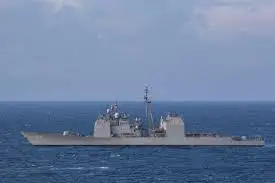
October 28, 2025 — In one of the most lethal single days yet of the U.S. administration’s maritime anti-narcotics campaign, Defense Secretary Pete Hegseth announced that U.S. forces struck four vessels in the eastern Pacific Ocean on Monday, killing 14 people and leaving one survivor. The newly disclosed strikes mark a significant escalation from prior operations, drawing scrutiny at home and unrest across regional partners.
The Strikes: What Happened
According to Hegseth’s announcement, the operation involved three separate strikes targeting four vessels navigating along “known narco-trafficking routes” in international waters of the eastern Pacific.
He specified the breakdown:
- Eight men were killed in the first strike
- Four in the second
- Three in the third
- One person survived and is currently the subject of search and rescue efforts
The U.S. Southern Command (USSOUTHCOM) asserted that, upon detecting a survivor in the water, standard search-and-rescue protocols were initiated and Mexican authorities, at the U.S. request, accepted responsibility for coordinating the rescue.
While Hegseth offered video clips—showing vessels engulfed in flames and exploding—he did not provide detailed evidence linking the struck vessels to known cartel organizations or offer names of those killed.
Escalation in Campaign: From Caribbean to Pacific
Earlier phases of the U.S. campaign targeted vessels in the Caribbean Sea, particularly off the coast of Venezuela. Over the course of October, the U.S. disclosed multiple strikes:
- On October 16, a covert strike killed two people on a vessel with two survivors taken into custody.
- On October 17, a strike struck a vessel linked (allegedly) to the Colombian National Liberation Army (ELN), killing three. The ELN denied any involvement.
- On October 24, the first night-time strike was publicly disclosed, hitting a vessel linked to the Venezuelan gang “Tren de Aragua,” killing six.
With the Pacific strikes, the campaign now spans multiple maritime theaters and marked a shift both in geography and in intensity.
Additionally, the U.S. has repositioned naval assets, including ordering the USS Gerald R. Ford aircraft carrier strike group toward the Caribbean, signaling potential follow-on escalation toward land targets.
President Trump is reported to have already signaled the next phase: “land is going to be next” — meaning operations may soon move out of maritime intercepts and onto regional terrain.
Legal, Political, and Regional Pushback
Legal Questions
One of the most contentious issues is the legal authority for using lethal force at sea in the name of counter-narcotics operations. Unlike past campaigns (e.g. against al-Qaida), the U.S. lacks a clear congressional authorization for use of force (AUMF) against drug cartels. Critics argue that the administration is relying instead on dubious interpretations of Article II powers (the president’s authority as commander-in-chief).
Sen. Rand Paul—among others—has called the strikes “extrajudicial killings”, demanding greater transparency and legal justification.
Political Resistance
Even within his own party, Trump faces pushback. Several Republican senators have expressed concern that the administration is overstepping constitutional checks and bypassing Congress. Critics demand declassification of information and judicial or legislative oversight to ensure accountability.
Programmatic critics also caution that militarizing drug enforcement risks long-term mission creep, unintended civilian harm, and diplomatic strain.
Regional Backlash
Mexico has publicly criticized the strikes. President Claudia Sheinbaum demanded consultation with the U.S. over maritime operations, asserting that international treaties and sovereignty must be respected.
Mexican naval units are actively participating in search-and-rescue for the survivor discovered in the Pacific, under an arrangement with the U.S. Coast Guard.
Colombia, a traditional anti-narcotics partner of the U.S., has grown uneasy. Ties already frayed following recent sanctions by Washington on Colombia’s President Gustavo Petro over alleged involvement in drug trafficking—accusations Petro denies.
Some observers worry that further moves—especially if strikes shift to land or near national coasts—could provoke regional blowback, accusations of imperial overreach, or incidents escalating into broader conflict.
The Numbers So Far
With Monday’s strikes, the officially recorded U.S. maritime campaign has resulted in at least 51 confirmed deaths (according to Hegseth’s initial tally) across some 13 vessels struck since early September.
Some later reports, including from Time Magazine, place the cumulative death toll as high as 57, factoring in unannounced or newly disclosed incidents.
It is not clear whether all victims were cartel operatives or whether civilian lives were lost mistakenly. One family of a reported victim has disputed cartel linkage, claiming their relative was a fisherman.
Strategic Implications & Risks
- Blurring the line between war and law enforcement
The U.S. is treating drug traffickers as “narco-terrorists,” comparing them to al-Qaida, even framing the campaign as part of an “armed conflict.”
That redefinition carries deep consequences: admitting such strikes as acts of war may legitimize lethal action but also triggers requirements under international humanitarian law (IHL). - Operational scope creep
The shift from maritime hits to threats of land operations suggests escalation. Once land strikes begin, questions mount: targeting borders, sovereign terrain, or even regime-linked infrastructure? - Intelligence and attribution demands
To maintain legitimacy, the U.S. must present credible intelligence tying vessels to specific cartel networks. Without transparency, the campaign risks being dismissed as arbitrary or illegitimate. - Regional alliances and sovereignty concerns
Mexico, Colombia, and other coastal states may push back if they perceive U.S. operations infringing their territorial waters, or making unilateral decisions. The need for coordination and diplomatic buy-in is greater than ever. - Domestic legal and constitutional challenges
The absence of congressional authorization raises red flags in U.S. institutions. In the coming weeks, the courts or Congress may demand justification or attempt to curtail the campaign. - Civilian casualties and moral risk
Misidentification, collateral harm, and mistaken targeting remain grave possibilities. Any civilian death could galvanize opposition, legal liability, or diplomatic fallout.
What to Watch
- Rescue & fate of the survivor: whether the lone surviving person will be turned over to U.S. custody, prosecuted, or released, and whether their testimony sheds light on target selection.
- Congressional response: whether lawmakers will demand hearings, classifications, or challenge the legal basis of the campaign.
- Declaration of land operations: whether U.S. forces begin targeting onshore cartel hubs or accomplice states (e.g. Venezuelan territory).
- Statements from regional governments: how Mexico, Colombia, Ecuador, and others respond diplomatically or militarily.
- Evidence disclosure: whether the U.S. will declassify photos, intercepts, or satellite intelligence linking targets to cartel networks.
- Judicial or international challenges: potentially in U.S. courts, Inter-American Commission, or International Criminal Court (depending on jurisdiction and claims).